Radiologic Technology
Why Study Radiologic Technology
What is Radiologic Technology?
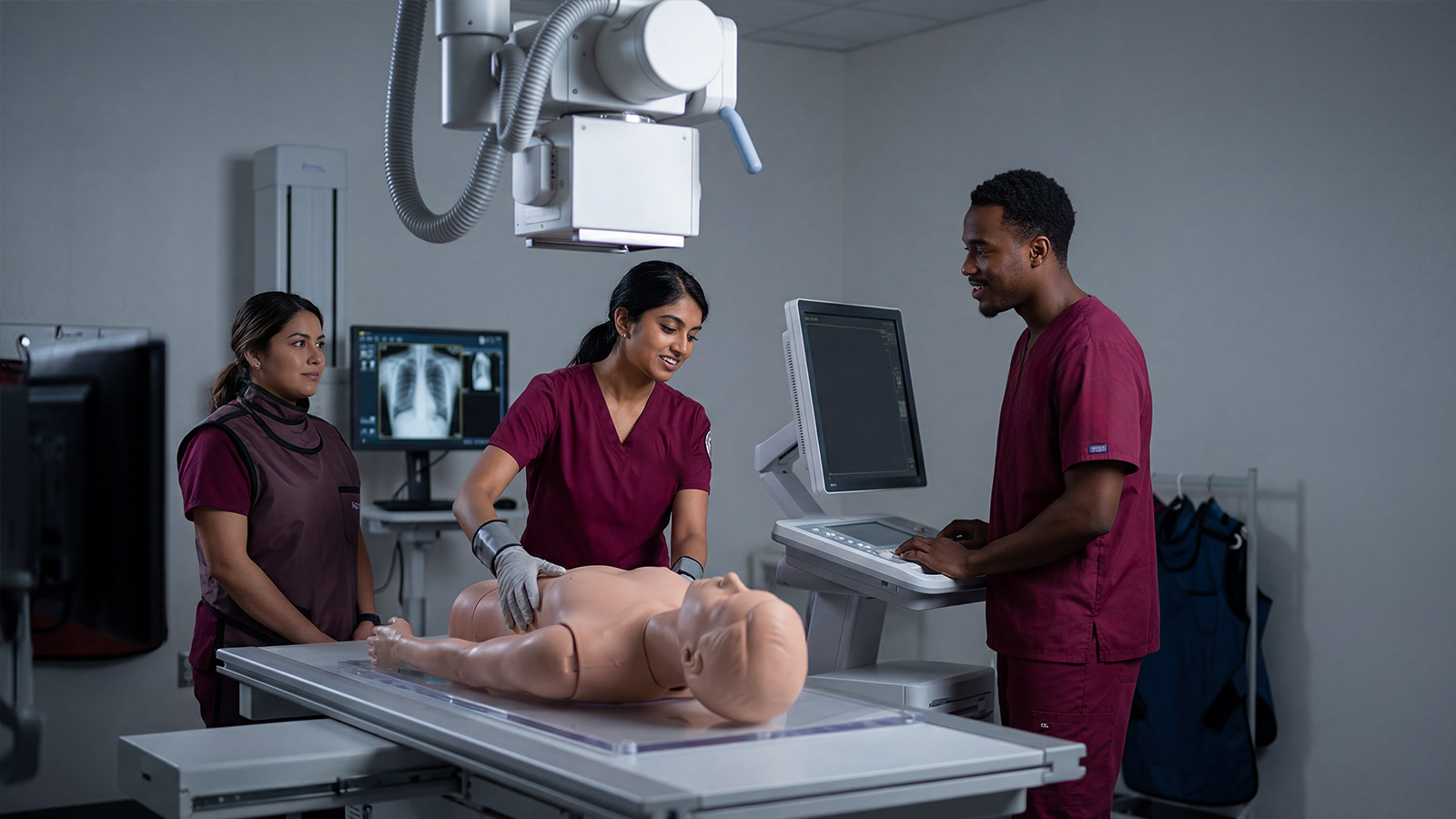
Radiologic Technology is a science combining advanced technology and human compassion. Radiologic technologists use their knowledge of physics, human anatomy and physiology to create permanent medical images for the diagnosis of disease.
In the past ten years the Radiologic Technology profession has advanced and expanded into the specialized areas of computerized and magnetic imaging. The profession continues to grow as does the demand for qualified Radiologic Technologists. Radiology is an exciting and challenging profession for the 21st century.
About Our Program
The Radiologic Technology Program at Foothill College has been in existence since 1961 and is accredited by the Joint Review Committee on Education in Radiologic Technology (JRCERT), and approved by the California Department of Public Health, Radiologic Health Branch (RHB). The Radiologic Technology Program was awarded the maximum accreditation award by JRCERT of 8 years in 2024. General program accreditation information and the current accreditation award letter can be found here.
The radiography program is accredited by the:
Joint Review Committee on Education in Radiologic Technology
20 North Wacker Drive, Suite 2850
Chicago, IL 60606-3182
(312) 704-5300
Website: www.jrcert.org
E-mail: mail@jrcert.org
The program has an excellent reputation within the community and throughout California for providing well-qualified technologists.
After completing 23 consecutive months of instruction-with lectures, experiments in the on-campus lab, and supervised hands-on experience in an affiliated clinical facility-students receive an Associate in Science Degree in Radiologic Technology and qualify to apply to take the California State Licensing Exam and the ARRT Registry Exam in Radiologic Technology.
The Radiologic Technology program has an articulation agreement with the Radiologic Sciences Program at California State University, Northridge. Graduates from the program can transfer to California State University, Northridge to attain a Bachelors Degree in Radiologic Sciences.
As a Radiologic Technologist, you will:
- Work with doctors to provide quality images in the radiology department, surgery, emergency room, hospital room, outpatient clinic or imaging centers,
- Deliver the least amount of radiation dose,
- Provide physical and mental comfort, and
- Work with state-of-the-art imaging equipment.
Quick View - Radiologic Technology
Program: Radiologic Technology
Degree/Cert: AS/No
Length: 23 months
Start/End: July/June
FT/PT: FT
Number Accepted: 22–24
Application Window: Oct 1–March 1
Application Deadline: March 1 each year.
Prerequisites: Yes
Approx. Cost of Program Tuition: $5,200
National Lic./Cert.: Yes
State Lic.Cert.: Yes
Est. Annual Salary: $114,000 - $120,000
Ready to Apply?
The Radiologic Technology Program is a 23-month, selective-admission program. Be sure to review prerequisites before starting your application.
Read Prerequisites
What you can do with a degree in Radiologic Technology

A major in Radiologic Technology can prepare you for various careers in:
- Computed Tomography
- Mammography
- Magnetic resonance imaging
- Interventional radiography
- Education and management
Degrees & Certificates
View list below for programs offered at Foothill. Then select program map for a possible schedule that fulfills program and college requirements.
For program requirements and full course listings, view degrees and certificates information.
Program Mission, Goals & Outcomes
1. Students will be clinically competent.
Student Learning Outcomes
- Students will apply positioning skills.
- Students will select technical factors to achieve diagnostic images and reduce patient radiation dose.
2. Students will communicate effectively as an active member of the health care team.
Student Learning Outcomes
- Students will demonstrate oral communication skills.
- Students will demonstrate written communication skills.
3. Students will apply critical thinking.
Student Learning Outcomes
- Students will critique images to determine diagnostic quality.
- Students will perform procedures that require situational critical analysis.
Related Programs and Degrees


