Veterinary Technology
Apply for AdmissionWhy Study Veterinary Technology
At Foothill College, we have career training for both veterinary technicians and veterinary
assistants. What's the difference between the two programs?
Veterinary Technician
- Admission by application
- Prerequisites of about a year of school
- Accredited by the AVMA-CVTEA
- Earn an Associate in Science degree leading to license
Learn more about the Vet Tech program, including cost of program
Veterinary Assistant
- Open enrollment
- No prerequisites
- No degree or license
- Training not recognized by the AVMA.
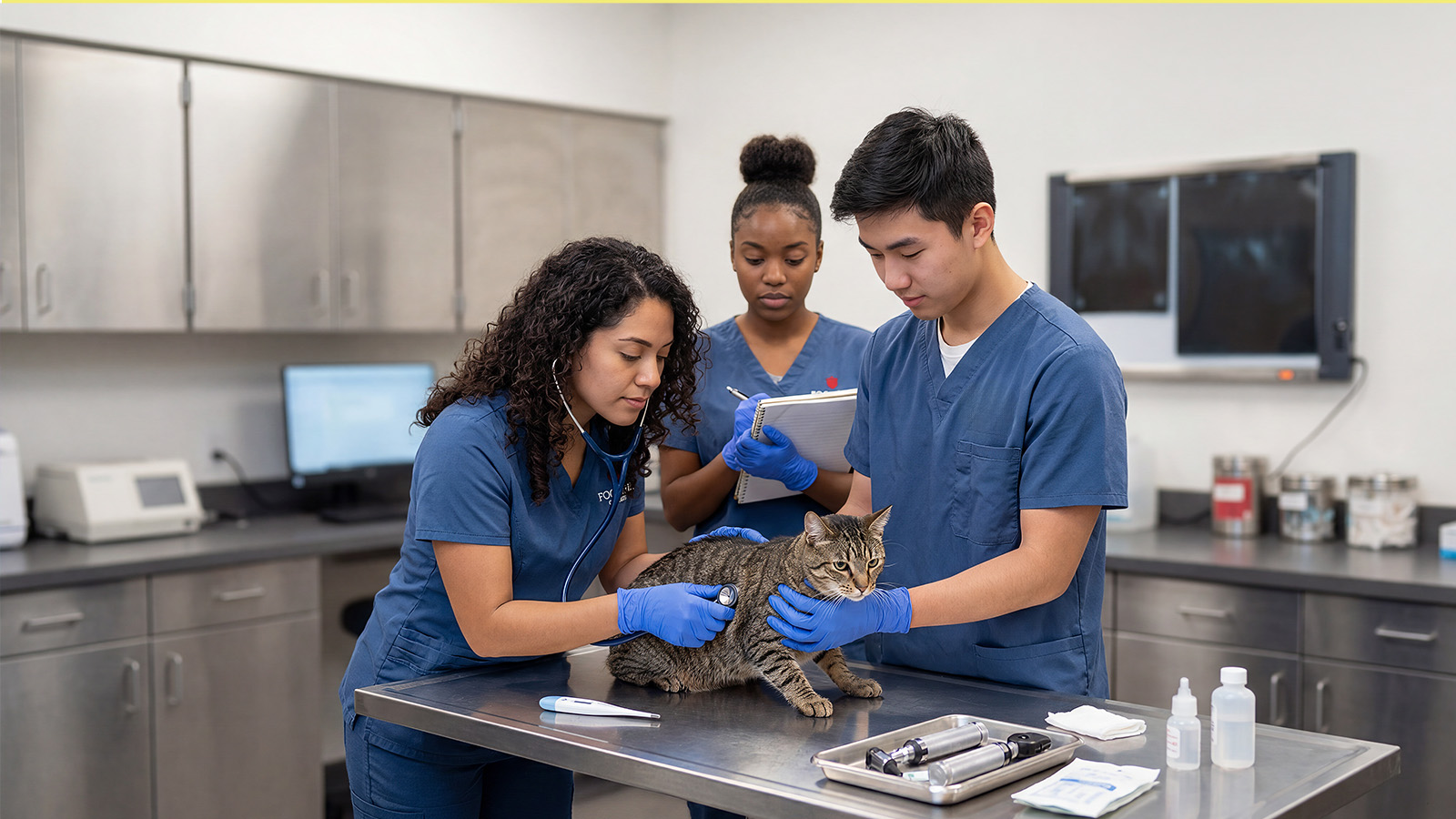
As a veterinary technician, you'll serve primarily as a professional assistant to veterinarians, biomedical researchers, and other scientists, and as such are an integral part of the veterinary health care team.
To work in the field, you must possess a unique combination of knowledge and skill involving basic science, animals, and people.
As the complexity of veterinary medicine increases, and as the public demand for state-of the-art care for their animals increases, the veterinary technician will play an ever increasing role in the delivery of excellent health care for animals.
The greatest demand for veterinary technicians is in a private veterinary practice working along side the veterinarian caring for companion animals. However, the demand for veterinary technicians in other fields is increasing.
The Veterinary Technology Program (VT) is one of seven allied health career programs at Foothill College in the Health Sciences and Horticulture Division.
- The program is unique in that it is one of only seven such programs in the State of California, and the only accredited A.V.M.A. program serving the greater San Francisco Bay Area.
- The Foothill College Veterinary Technology Program is a two-year Associates Degree program which is fully accredited by the American Veterinary Medical Association Committee on Veterinary Technician Education and Activities (A.V.M.A--C.V.T.E.A.). The program is an animal facility licensed by the United States Department of Agriculture-Animal and Plant Health Inspection Service (U.S.D.A.--A.P.H.I.S.).
-
January 1, 2023–December 31, 2025: VTNE Pass Rate: 89%; Graduation Rate: 92%; Job Placement: 100%.
Graduates of the program are eligible for State licensing as a Registered Veterinary Technician (R.V.T.), formerly known in California as an Animal Health Technician (A.H.T.).
We recognize the lack of diversity and the existing inequities within the veterinary field. Our goal is to equip students with the awareness and skills needed to identify these disparities and actively address the challenges associated with them. By fostering an environment of reflection, learning, and advocacy, we aim to support a more inclusive and equitable future for the veterinary profession.
Mission Statement
To empower the future veterinary technician to be a progressive and compassionate member of the veterinary team and community.
Core Values
- The knowledge and skills to provide exemplary care to veterinary patients.
- Compassion for animals, families, team members, and community.
- Dedication to lifelong learning across all disciplines and species.
- Embrace the connections among humans, animals and the environment.
- Encourage and promote diversity.
- Rabies is a fatal diseas with 99% fatality rate. Rabies is endemic in several wildlife species and rarely occurs in domestic animals in California. People are usually exposed to rabies via a bite wound from an infected animal; other routes of exposure are possible but uncommon.
- All Veterinary Technology students must be fully vaccinated (2 rabies vaccines at least 10 days prior) before they handle any program animals. We encourage all students to reach out to their primary care physician to see if they can obtain rabies vaccines through their physician.
Total cost of program = approximately $6,000, and includes the following:
- Tuition, based on state resident at 92 units of Vet Tech courses: $2,852
- Fee: approx $400
- Scrub: approx $60
- Stethoscope: approx $100
- Books: approx $1,160
- VTNE exam: $325
- Fees associated with exam: $100
- Rabies Vaccines: $1200
Note: Does not include state licensing fees, which may change. The current cost is $700 for initial license. For up-to-date information, see the California Veterinary Medical Board website.
- Provide approved coursework leading to a meaningful Associate in Science Degree.
- Graduates will meet the minimum eligibility requirements for the California Veterinary Technician Licensing Examination and will be equipped to earn a passing score and become Registered Veterinary Technicians.
- Maintain high standards for knowledge and performance, provide rigorous academic and practical training in veterinary technology, and produce graduate technicians with superior qualifications.
- Instill in the students a strong sense of professionalism and demonstrate the value of personal accountability and integrity and a solid work ethic.
- Provide the necessary knowledge, skill and ability.to enable immediate employability of graduates at an entry level in clinical practice, the biomedical industry, and other areas where veterinary technicians are in demand. Specifically, to meet the locally high demand for well-trained, highly skilled registered veterinary technicians.
Quick View - Vet Tech

Program: Veterinary Technology
Degree: AS
Length: 2 years
Start/End: July/June
FT/PT: FT
Number Accepted: 32
Application Window: Oct.1–April 21
Program Application Deadline:April 21
Prerequisites: Yes
Approx. Cost of Program: $5,500
National Licensing Exam: Yes
State Licensing Exam: No
Est. Annual Salary (with license): $40,000–$60,000
What you can do with a degree in Vet Tech

A major in Vet Tech can prepare you for fields with a high or growing demand such as:
- Private veterinary practice
- Teaching
- Pharmaceutical sales
- Humane societies
- Livestock production
- Equine practice
- Biomedical research
- Diagnostic laboratories
- Zoo/wildlife medicine
- Veterinary supply sales
- Public health organizations
- Pet food industry
Degrees & Certificates
View list below for programs offered at Foothill. Then select program map for a possible schedule that fulfills program and college requirements.
For program requirements and full course listings, view degrees and certificates information.
NOTE: When viewing this program map, you may select from two pathways — 1. Accelerated; and 2. Part-time.
Related Programs and Degrees


