Winter 2026 Exhibitions
Winter 2026 Exhibitions
Twenty-Four Blocks — Robert Kastigar
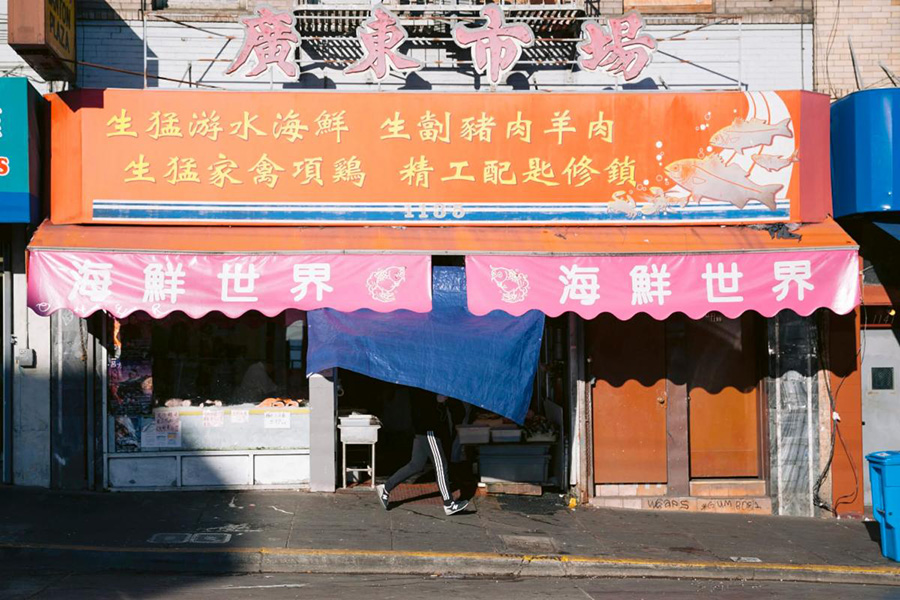
On View Jan. 5–Mar. 31, 2026
Gallery Hours
- Tuesday/ Wednesday/ Thursday: 1–7 p.m.
- Saturday: 10 a.m.–4 p.m.
Artist Talk and Reception
Saturday, Feb. 21, 2026
- KCI Gallery Building 4000 (Lower Level)
3–5 p.m. Artist Talk & Reception
Robert has built a distinguished career in advertising and design, helping some of the world’s most admired brands tell their stories in compelling ways. His portfolio includes work for Apple, Starbucks, Virgin America, Kodak, Williams-Sonoma, 7Up, Microsoft, and Nike. His work has been recognized nationally and internationally. His passion for photography grew alongside his creative career. Since 2015, he has pursued this project documenting life in San Francisco’s Chinatown. Currently, he is working in partnership with the Chinatown Community Development Center to deepen this project and explore the ways that food connects the ecosystem of the neighborhood. His work has been exhibited at the Center for Photographic Art in Carmel, as well as at Rayko Gallery, 4x5 Gallery, and Dickerman Prints Gallery in San Francisco. Robert is a creative director at Salesforce and is based in Carmel.
Visit robertkastigar.com to learn more about Robert's work.
San Francisco’s original Chinatown, comprising 24 square blocks centered on Grant Avenue and Stockton Street, is the oldest Chinese enclave in North America. It coalesced in 1851, born from the earliest immigrants’ desire to create community. Since then, Chinatown has weathered countless storms, both literal and metaphorical. From discriminatory laws and socioeconomic challenges to natural disasters and racially-motivated violence, its residents have faced and overcome myriad obstacles with grace and fortitude. The Chinatown of today is a testament to their continued collective resilience. These photographs from the Twenty-Four Blocks project aspire to shed light on the complexity and beauty of this iconic neighborhood.
Slavic San Francisco — Anastasiia Nelen
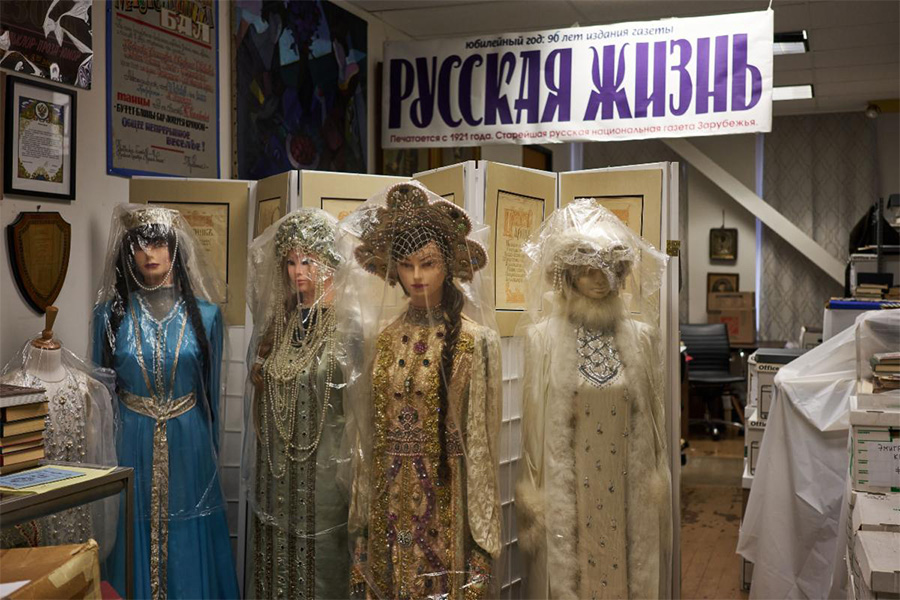
On View Jan. 5–Mar. 31, 2026
Gallery 6100 Hours
- Tuesday–Thursday, Noon–6 p.m., or by appointment
- To schedule a visit by appointment, email Judy Walgren at walgrenjudith@fhda.edu.
Artist Talk and Reception
Saturday, Feb. 21, 2026
- Gallery 6100, (Building 6100, Room 6104)
2–4 p.m. Artist Talk & Reception
Anastasiia Nelen is a documentary photographer whose work combines emotional storytelling with a deep focus on cultural identity and environmental conservation. Her long-term project Gold of Tuva, exploring life in one of Russia’s most remote Indigenous regions, earned the national My Planet Award (2019) for professional photo reportage. Her photographs have been featured in Forbes, Vanity Fair, and Vogue, reaching audiences worldwide.
From 2020 to 2023, Nelen’s solo exhibition Morocco Kingdom’s Colors toured leading state museums and cultural institutions, receiving wide media attention. She has photographed in more than 35 countries and recently completed a multiyear project on the endangered Caretta caretta sea turtles in Turkey in collaboration with Sony, contributing to global awareness of coastal wildlife conservation.
In 2024, Nelen was nominated for the Leica Oskar Barnack Award—one of the world’s most prestigious and competitive international photography prizes. That same year, she was selected for the Eddie Adams Workshop in New York, a highly selective program admitting only 100 emerging leaders in photography annually. She holds the EB-1 visa for extraordinary ability in photography — a U.S. designation reserved for professionals at the highest international level.
Visit mnelen.com to learn more about Nelen's work.
The map of the U.S. coastlines is dotted with familiar Russian names: New Kuban, Sebastopol, Russian River… Orthodox church crosses shimmer over San Francisco, and you can easily find a place serving the traditional soup, borsch. The presence of Russians in California began with the founding of Fort Ross in 1812 and had a significant influence on the culture, science, and art of the region. After moving to the U.S., I encounter Americans daily who speak of their Slavic roots—and it has never stopped surprising me how this relation to the past generations persists through time in modern America.
The term “Russian Americans” emerged in the early 20th century and is loosely used to refer to descendants of immigrants from the Russian Empire and later the USSR. The subjects of this project have fascinating family stories of emigration to the U.S. Some of these people were born in the U.S. and have never visited Russia or post-Soviet countries. Others have been living in the U.S. for more than half of their lives. Their self-identification has strong connections with the culture and faith of their ancestors. However, the culture preserved, nurtured, and developed within the community of descendants of the first emigrants belongs to a different place and time, distinct from the culture of the Soviet era and beyond.
The Orthodox Church has always been the main unifying force for Slavic people of different generations, views, and eras across the U.S. It serves not only as a source of spiritual support but also as a place for social gatherings and mutual aid. While the community was once more closed, today it represents a blend of Slavic traditions and the realities of American life.
