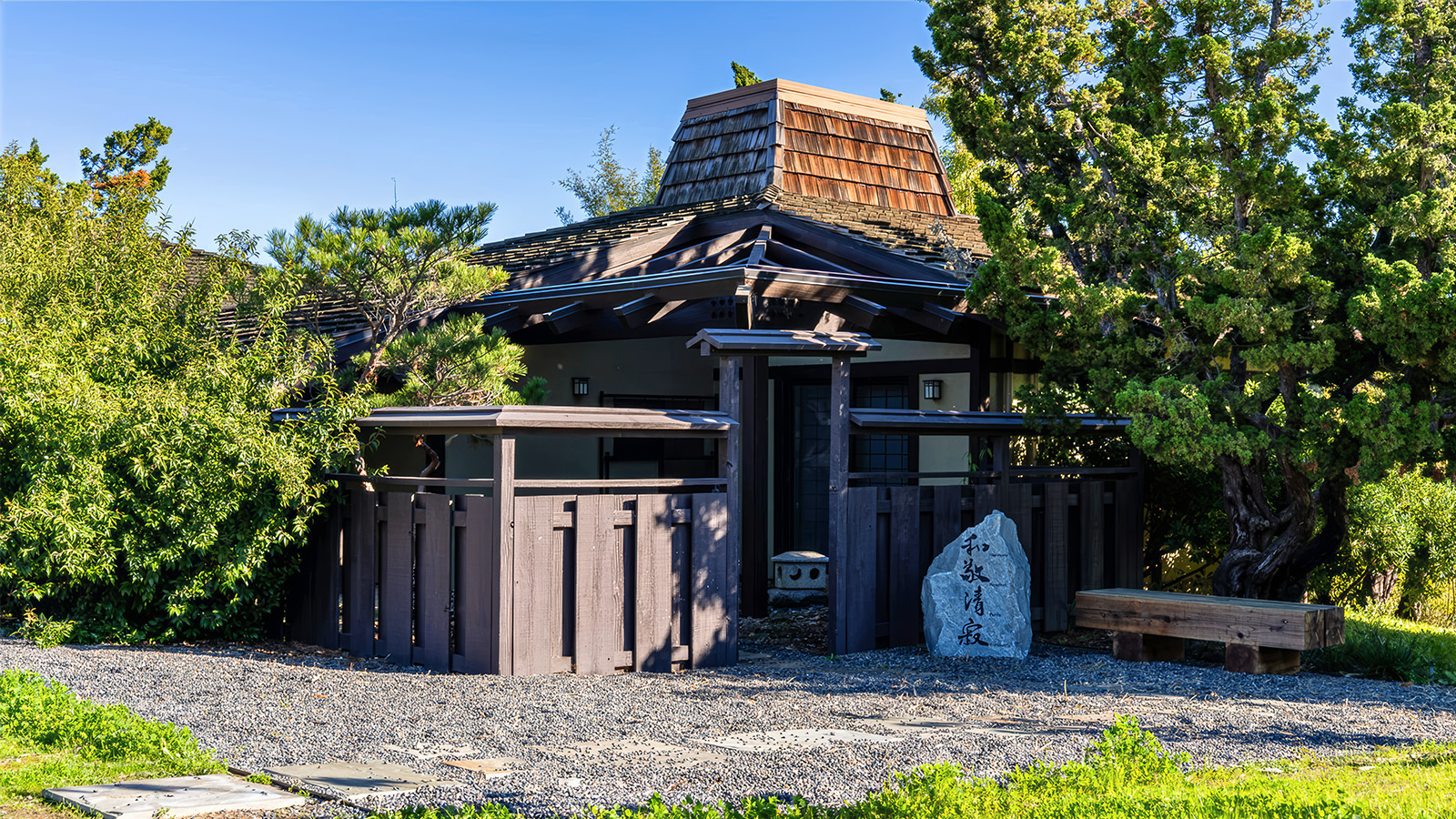
Japanese Cultural Center
Japanese Culture—Integral to our Language Program
Donations—lasting symbols of cultural friendship
With financial support from companies in Japan, and with many individuals from both Japan and the local college community dedicating their money, time, and efforts, construction of the Japanese Cultural Center and garden began in 1981. For the Japanese, these donations became a symbol of friendship between the United States and Japan.
The Japanese Cultural Center includes an authentic Japanese chashitsu, or tea room, one of the few outside of Japan, equipped to teach chado, or Japanese tea ceremony, called “the way of tea.” The other half of the building, which includes a showcase for the display of Japanese arts and crafts objects, serves as a classroom for students.
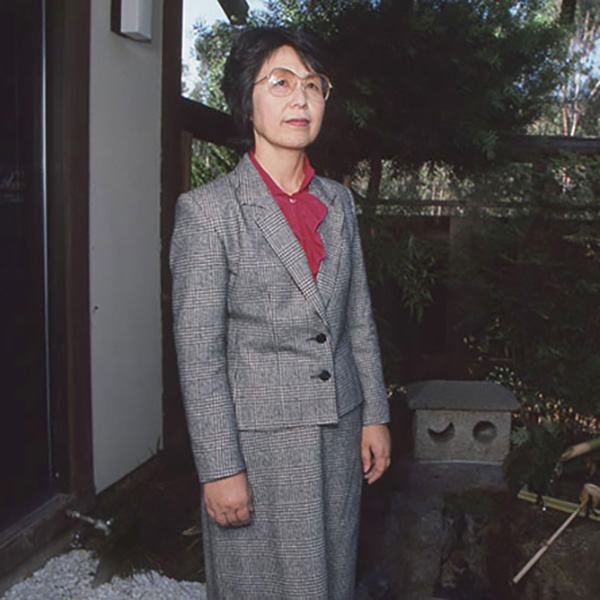
Dr. Michiko Hiramatsu
Program Founder
Dr. Michiko Hiramatsu introduced the Japanese Language program at Foothill College
in 1973, the first Associate of Arts degree in Japanese offered by a community college.
Believing that Japanese culture was integral to the Japanese language, Dr. Hiramatsu initially invited community volunteers to teach Japanese arts, such as sumi-e (brush painting) and ikebana (flower arrangement). As she sought a venue on campus where she could more effectively teach aspects of Japanese culture to students, she thought that since the Foothill College campus itself was designed with a Japanese influence, a Japanese cultural center would fit in nicely.
Dedication Ceremony
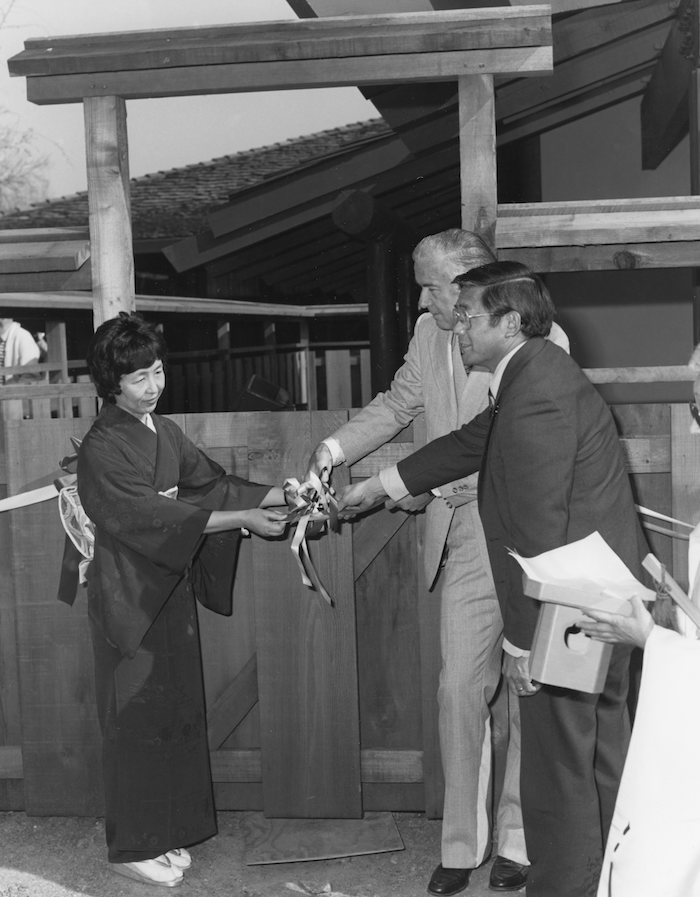
The Japanese Cultural Center was dedicated on Feb. 6, 1982, with Dr. Hiramatsu as its director. Pictured above at the dedication ceremony are Dr. Hiramatsu, Foothill College President James S. Fitzgerald, and former U.S. Secretary of Transportation Norman Mineta. Mineta has held several positions in local and federal government; at the time of the JCC dedication, he was a member of the U.S. House of Representatives.
Dedicated to the Issei, or first-generation immigrant Japanese
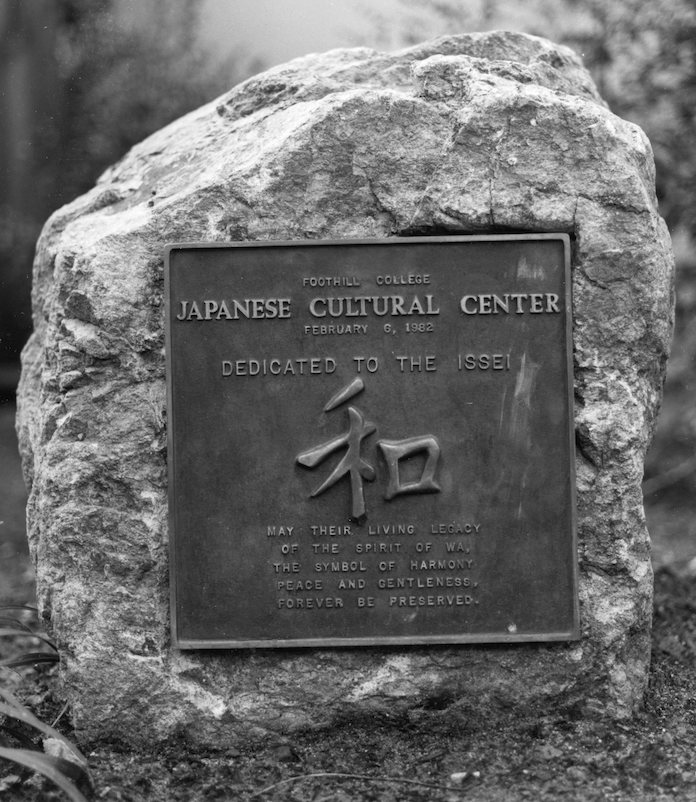
A boulder at the entrance with an inscription reminds visitors that the building was dedicated to the Issei, or first-generation, immigrant Japanese, in the spirit of Wa, or harmony.
Dr. Hiramatsu felt that Japanese and American cultures could co-exist in harmony, and the Japanese Cultural Center was a means to that goal.
Within the Japanese Cultural Center
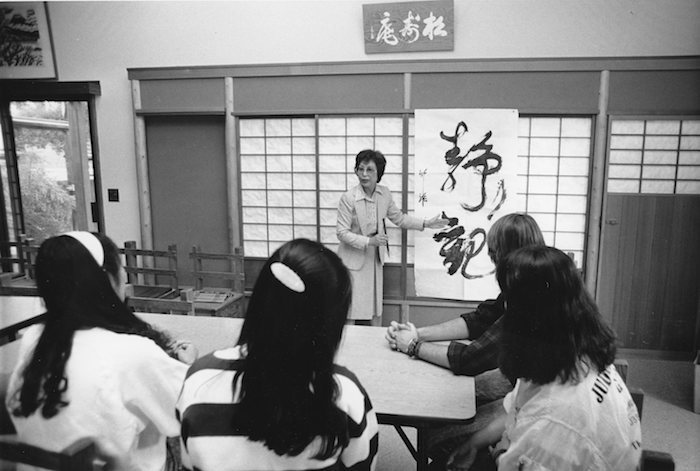
Since its dedication in 1982, the Center has served the college and community as a meeting place for students and student clubs, as well as visitors from the U.S. and Japan. It has been the site for Japanese cultural festivals and events, including visits from Japan by Japanese Living National Treasures, held to expose the community to Japanese culture and art, as well as to raise donations for the Center.
Sho Ju An Teahouse
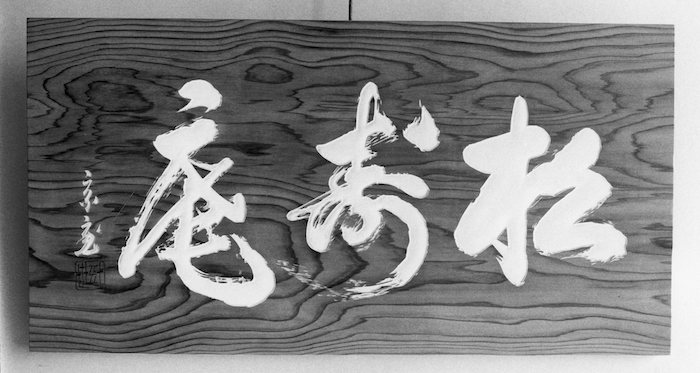
Plaque showing the name of the teahouse — “Sho Ju An,” which was given in 1982 by the 15th-Generation Grand Master (iemoto) of Urasenke School of Tea, Sen Sōshitsu XV (current SEN Genshitsu, Former Grand Master).
Authentic Japanese Tea Ceremony
Bamboo Garden
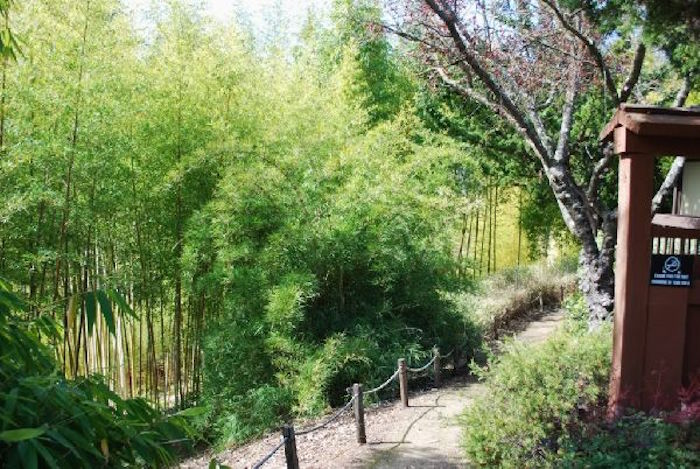
Explore a peaceful, two-acre bamboo garden at the Cultural Center. In 1989, Professor Emeritus Gordon Holler (Photography) led a team of volunteers to plant the first six bamboo with support from the American Bamboo Society. Today, the garden features more than 81 varieties from around the world.
As you walk the garden paths, you can learn about each species through labeled signs and maps. Benches throughout the space offer a quiet place to relax and recharge.
Azumaya
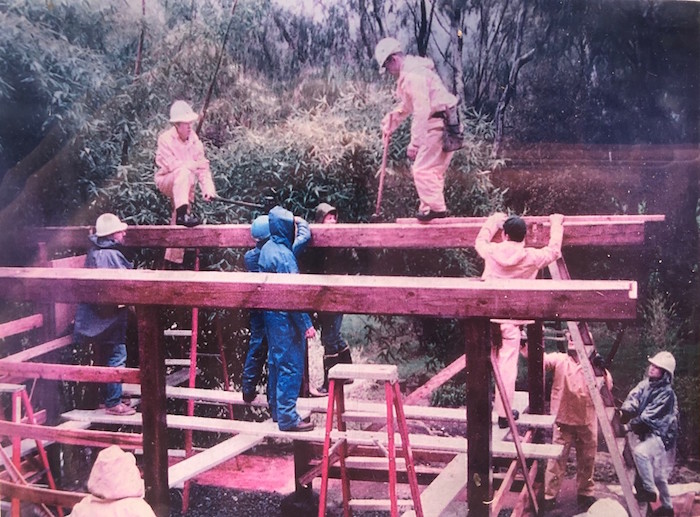
Discover the Azumaya meditation pavilion in the east section of the garden. Crafted by students at the International College of Crafts and Arts in Toyama, Japan, and gifted in 1998, the pavilion offers a quiet place to relax and enjoy nature.
As you walk the surrounding paths, you can explore the lower garden, visit the 'dry garden' with its stone stream and pond, and pause on benches to reflect and recharge.
Our Deep AppreciationFoothill College is deeply appreciative of Dr. Michiko Hiramatsu’s vision to create such an important cultural and educational educational area on campus. Dr. Hiramatsu passed in 2017, but her legacy of sharing Japanese culture continues to live on at Foothill College. |

Contact UsIkuko Tomita RakowJapanese Department Chair650.949.7777 rakowikuko@foothill.edu |
