Fall 2026 Exhibitions
Fall 2026 Exhibitions
Philip Sager: Family Frame
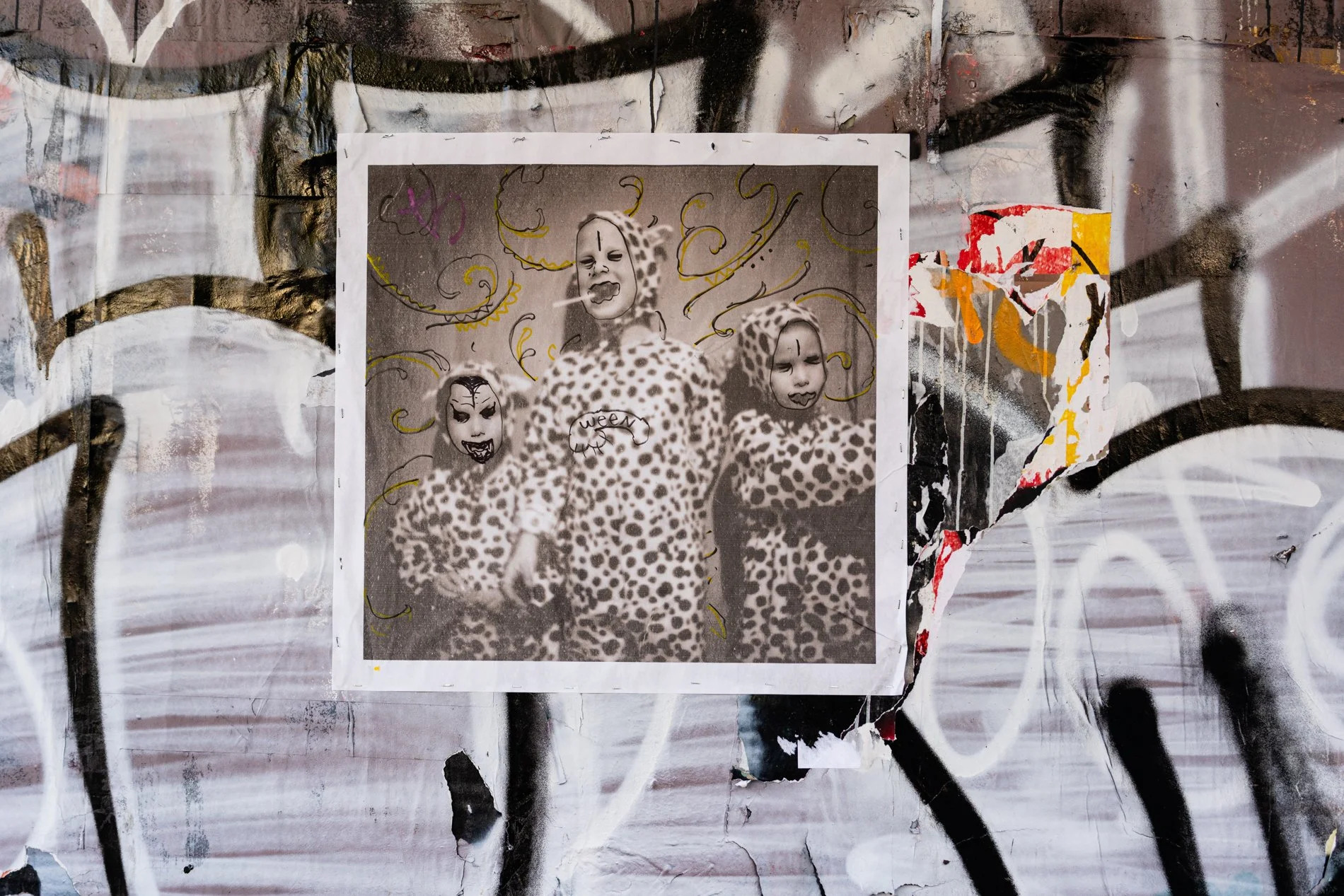 Photo from Family Frames by Philip Sager
On view Sept. 21–Dec. 4, 2026
Location: Gallery 6100
Gallery Hours: (Reach out to Judy Walgren to schedule a time: walgrenjudith@fhda.edu)
- Tue: 3–9 p.m.
- Wed: 1–9 p.m.
- Thu: 12–5 p.m.
Artist Talk: November 4, 2026, 3–4 p.m.
Reception: November 4, 2026, 4–6 p.m.
On view in Gallery 6100 (building 6100, room 6104, we have Family Frames, a powerful and haunting interactive exhibition by Bay area artist Philip Sager.
Family Frames explores loss, memory, and the fate of private history in public life. Dr. Sager enlarges childhood photographs and wheat-pastes them onto walls throughout San Francisco, surrendering them to weather, time, and strangers.
Passersby mark, tear, obscure, or leave the portraits untouched. Their interventions echo the dysfunction and disintegration of his family while creating an unscripted visual conversation—each alteration shaping what the next person encounters.
Returning to photograph these fleeting states, Sager becomes both witness and editor. His family's archive becomes a shared social document; its memories are continually rewritten by passersby.
Dr. Sager will also be engaging in a virtual artist talk for the Center for Photographic Art on November 19th from 5:00 to 6:00 pm. The admission is free for students. Register here
Reach out to Judy Walgren, walgrenjudith@fhda.edu for a free code if you are a student.
Ellen Konar and Steve Goldbland: Cut Short
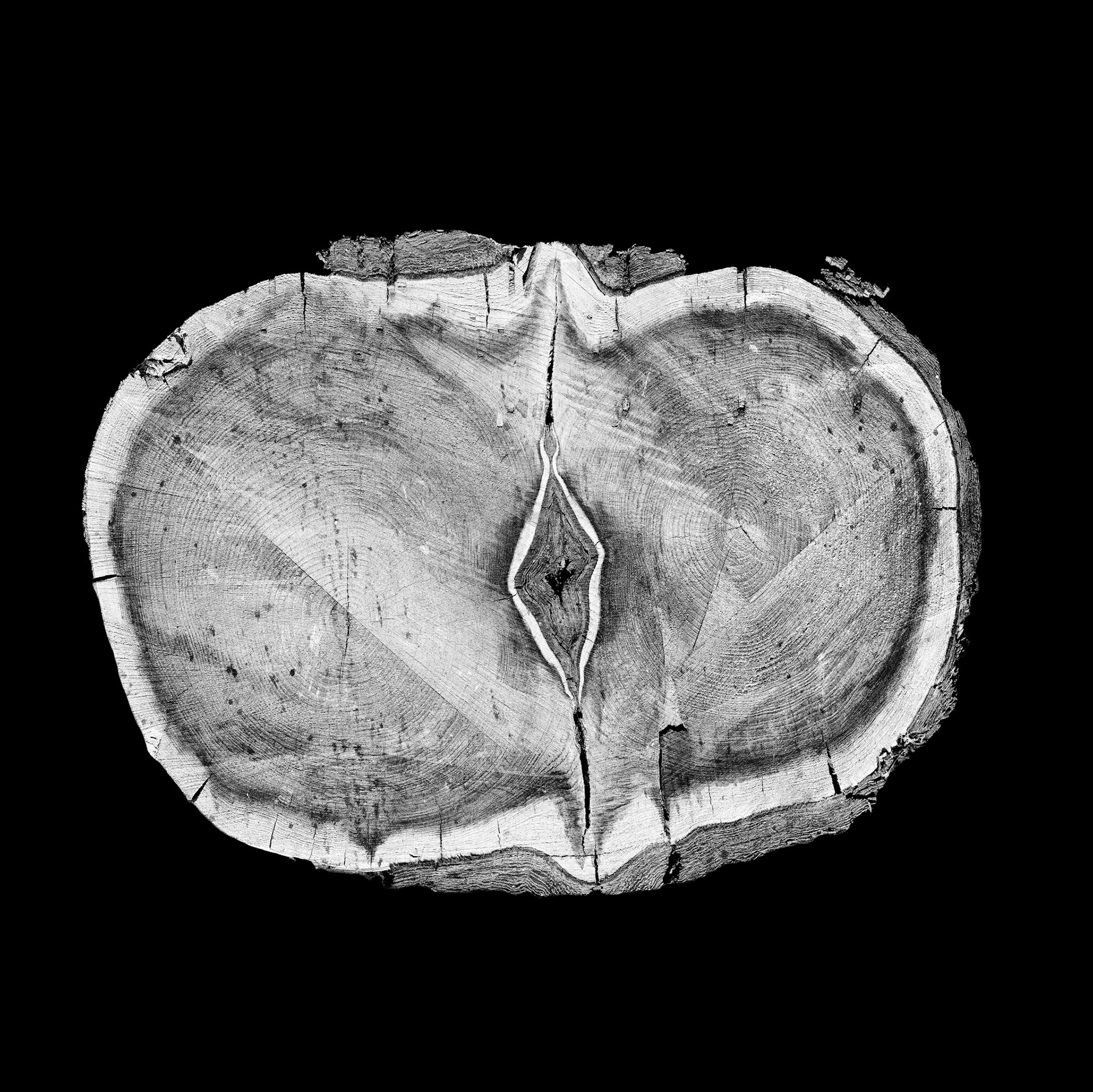 Ellen Konar and Steve Goldbland, from the body of work Cut Short. "Edgar."
On view Sept. 24–Dec. 4, 2026
Location: KCI Gallery Building 4000 (Lower Level)
Artist Talk & Reception: October 18, 2026, 2–5 p.m.
Cut Short is an elegy for felled trees, honoring their majesty and mourning their loss. The images on display are portraits, each revealing the distinctive “face” of an individual tree through its cross-section. Every ring marks a year of growth and service. These patterns bear witness to lives shaped by time and changing conditions—years spent sheltering wildlife, offering shade on sweltering afternoons, and performing the near wizardry of absorbing carbon dioxide and releasing oxygen, helping cool the earth amid relentless climate upheaval.
The project began in personal sorrow, with a reluctant decision. With a building permit for their future home at stake, the artists complied with their town’s demand to remove a stand of redwood trees classified as “non-native” and therefore deemed “invasive.” Over the following decade, frequent visits to arborist recycling yards led them to document other felled trees whose lives had also been cut short by the decisions of individuals, companies, and municipalities.
Through these portraits, Cut Short asks viewers to consider the delicate balance between human consumption and the environmental costs of deforestation and climate change. The trees’ unique faces bear witness to what has been lost.

Contact UsJudy Walgren, Photography Department ChairBuilding 6000, Office 6006650.949.7555 walgrenjudith@fhda.edu |
