

SLI Events
Interested in equity, diversity, and inclusion issues in the STEM field? Join us for
talks with academics, practitioners, and educators who are doing the work in a variety
of ways.
Open to students, faculty, and staff interested in these issues, our STEM Equity Seminars for Owls (SESO) series is hosted by the Science Learning Institute in partnership with our Foothill STEM Division .
Seminar Series Format
Each session will involve a main speaker(s) who will present their research or work. There will be time for questions and answers at the end of each talk.
All sessions are recorded and posted here as well as on the Science Learning Institute YouTube channel for later reference.
School Year 2021-22 Talks
Please see the speaker line-up for the 2021-22 school year
RSVP to Receive a Calendar Invite
In order to ensure a secure Zoom environment, we will be using a waiting room and only admitting participants with a first and last name. Additionally, we will close the Zoom room at 10 minutes past the starting time and only admit participants who contact the Dean (note will be included in the waiting room).
Dr. Kellie Ann Jurado, Presidential Assistant Professor of Microbiology at University of Pennsylvania: 11/12/21
Lessons from Viral Inflammation
Friday, 11/12/21 from 11am - 12:30pm
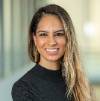 Kellie Ann Jurado is a Presidential Assistant Professor in the Microbiology Department
at University of Pennsylvania. Her research program is interested in emerging viral
pathogenesis and in delineating antiviral immune control mechanisms at the maternal-fetal
interface and in the central nervous system. She completed her postdoctoral training
in Immunobiology with Akiko Iwasaki at Yale University and earned her PhD with Alan
Engelman at Harvard University. She is the recipient of many prestigious grants and
fellowships, including the L’Oreal for Women in Science Award and mostly recently
being named a Pew Biomedical Research Scholar.
Kellie Ann Jurado is a Presidential Assistant Professor in the Microbiology Department
at University of Pennsylvania. Her research program is interested in emerging viral
pathogenesis and in delineating antiviral immune control mechanisms at the maternal-fetal
interface and in the central nervous system. She completed her postdoctoral training
in Immunobiology with Akiko Iwasaki at Yale University and earned her PhD with Alan
Engelman at Harvard University. She is the recipient of many prestigious grants and
fellowships, including the L’Oreal for Women in Science Award and mostly recently
being named a Pew Biomedical Research Scholar.
Link to the Jurado Lab's website
Dr. Mireille Kamariza, Junior Fellow, Society of Fellows at Harvard University: 1/28/22
The power of solvatochromism: using environment-sensitive probes to diagnose tuberculosis
Friday, 1/28/22 from 11am - 12:30pm
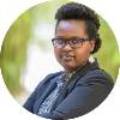 Born in in Burundi, Dr. Mireille Kamariza faced many barriers to becoming a scientist.
It was only after immigrating to the United States and later when she started her
undergraduate schooling at San Diego Mesa College that her scientific journey began.
Given her background and personal interests, Dr. Kamariza's scientific research has
since grown to focus on tackling important questions in infectious disease research,
especially those that may have direct impact in her country of origin.
Born in in Burundi, Dr. Mireille Kamariza faced many barriers to becoming a scientist.
It was only after immigrating to the United States and later when she started her
undergraduate schooling at San Diego Mesa College that her scientific journey began.
Given her background and personal interests, Dr. Kamariza's scientific research has
since grown to focus on tackling important questions in infectious disease research,
especially those that may have direct impact in her country of origin.
In her talk, Dr. Kamariza will describe her work developing novel reagents to rapidly detect tuberculosis in low-resource settings.
Beyond her research duties, Dr. Kamariza is dedicated to increasing diversity in STEM. She has founded and launched several student groups that have gone onto becoming pillars of diversity initiatives during her undergraduate and graduate career. Additionally, she has developed programming to inspire the scientific community to push towards more inclusive research practices and academic agendas. Ultimately, Dr. Kamariza intend to continue leveraging equity and inclusion in social practices and in scientific designs of academic research.
Check out this short video about Dr. Kamariza and her work on PBS Newshour.
Dr. Wendy Todd (Smythe), Dr. Henry Higholt Endowed Professor at University of Minnesota, Duluth : 3/4/22
Indigenous Geoscience Community: Creating Capacity & Safe Spaces for Diverse Scholars
Friday, 3/4/22 from 11am - 12:30pm
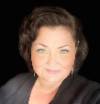 Dr. Wendy Todd (Smythe) is an Assistant Professor at the University of Minnesota Duluth
and holds a joint appointment between the Departments of American Indian Studies and
Earth & Environmental Sciences. She was the 2019 Professional of the Year by the American
Indian Science and Engineering Society (AISES) for her interdisciplinary research
in geoscience, Native Education, and policy, in 2020 she was elected to the AISES
Board of Directors. She was just awarded the Dr. Henry Higholt Endowed Professorship.
Dr. Todd is Alaska Native Haida.
Dr. Wendy Todd (Smythe) is an Assistant Professor at the University of Minnesota Duluth
and holds a joint appointment between the Departments of American Indian Studies and
Earth & Environmental Sciences. She was the 2019 Professional of the Year by the American
Indian Science and Engineering Society (AISES) for her interdisciplinary research
in geoscience, Native Education, and policy, in 2020 she was elected to the AISES
Board of Directors. She was just awarded the Dr. Henry Higholt Endowed Professorship.
Dr. Todd is Alaska Native Haida.
This discussion will introduce the Indigenous Geoscience Community whose goals are to address the importance of diversity in the geosciences and will consider Indigenous and Western knowledge systems, education equity, the elements of Place, Belonging, and Identity, that collectively create a Secure space for diverse scholars.
Past Spring 2021 Talks
Dr. Heather Flewelling, Astronomer
Pixel Pipelines and Surfing Telescope Data
Friday, April 30, 2021
11 a.m.–Noon PT, main presetation.
12:30 –2:30 p.m. PT, one on one/ small group sessions.
Dr. Flewelling's Bio
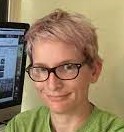 I received my BS in Physics from the University of Texas in 2001, and my PhD in Physics
from the University of Michigan in 2009. For my PhD thesis, I studied Optical afterglows
of Gamma-Ray Bursts, but also spent a lot of time writing code for the reduction pipeline
for robotic telescopes and for an instrument mounted on one of the telescopes in Hawaii.
For my first postdoc, I worked on the data reduction pipeline for the Pan-STARRS telescope,
which at the time had the world's largest camera used for astronomy, with 1.4 Gigapixels.
During my time in Pan-STARRS, I helped to design, test, and built the schema and database
for the now publicly available Pan-STARRS database. This database is the largest astronomical
database for a single telescope, with >6 billion objects, in 5 filters, and covering
3/4 of the sky. I also mined the Pan-STARRS data to find new and exciting variable
stars. Later, I worked as a postdoc for the ATLAS project, where I helped with their
pipeline and helped to find new near earth asteroids as well as new comets. I recently
started a new position at Canada-France-Hawaii Telescope, as an instrument scientist,
where I help with the queue scheduling, and making sure the images from the MegaPrime
Imager are reduced quickly and accurately.
I received my BS in Physics from the University of Texas in 2001, and my PhD in Physics
from the University of Michigan in 2009. For my PhD thesis, I studied Optical afterglows
of Gamma-Ray Bursts, but also spent a lot of time writing code for the reduction pipeline
for robotic telescopes and for an instrument mounted on one of the telescopes in Hawaii.
For my first postdoc, I worked on the data reduction pipeline for the Pan-STARRS telescope,
which at the time had the world's largest camera used for astronomy, with 1.4 Gigapixels.
During my time in Pan-STARRS, I helped to design, test, and built the schema and database
for the now publicly available Pan-STARRS database. This database is the largest astronomical
database for a single telescope, with >6 billion objects, in 5 filters, and covering
3/4 of the sky. I also mined the Pan-STARRS data to find new and exciting variable
stars. Later, I worked as a postdoc for the ATLAS project, where I helped with their
pipeline and helped to find new near earth asteroids as well as new comets. I recently
started a new position at Canada-France-Hawaii Telescope, as an instrument scientist,
where I help with the queue scheduling, and making sure the images from the MegaPrime
Imager are reduced quickly and accurately.
I am a vocal advocate for improving diversity in STEM. I co-created Astronomy Allies with Katherine Alatalo, which is a grassroots effort to provide mentoring and help to scientists experiencing harassment or other issues at astronomy conferences. I am currently a member for the Committee on the Status of Women in Astronomy (CSWA), where I am lead editor of the AASWomen newsletter, a newsletter which shares stories about women scientists, career advice, and job opportunities.
Shoshanah Cohen, Esther Conrad, and Jorge De Luna, Haas Center for Public Service, Stanford University
Community Engagement in STEM Classrooms: Building Community Partner Relationships and Enhancing Learning
Friday, May 28, 2021
1–2:30 p.m. PT
Speaker Bios
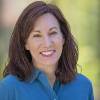 Shoshanah Cohen, Director of Community Engaged Learning in Engineering, received her BS in Industrial
Engineering from Stanford as well as an MA in Technology Strategy from Boston University
and an MBA from Harvard Business School. She started her career working in manufacturing
and spent more than 20 years in the field of global operations before moving to academia.
Shoshanah Cohen, Director of Community Engaged Learning in Engineering, received her BS in Industrial
Engineering from Stanford as well as an MA in Technology Strategy from Boston University
and an MBA from Harvard Business School. She started her career working in manufacturing
and spent more than 20 years in the field of global operations before moving to academia.
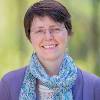 Esther Conrad, Director of Community Engaged Learning for Environmental Sustainability, received
her undergraduate degree in Earth Systems at Stanford, and has worked on environmental
and international development issues for over 15 years. She completed her Master’s
degree in International Affairs at Columbia University and her PhD in Environmental
Science, Policy and Management at UC Berkeley, where her research focused on policies
to support sustainable water management and adaptation to climate change.
Esther Conrad, Director of Community Engaged Learning for Environmental Sustainability, received
her undergraduate degree in Earth Systems at Stanford, and has worked on environmental
and international development issues for over 15 years. She completed her Master’s
degree in International Affairs at Columbia University and her PhD in Environmental
Science, Policy and Management at UC Berkeley, where her research focused on policies
to support sustainable water management and adaptation to climate change.
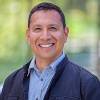 Jorge De Luna, Director of Community Engaged Learning in Health, holds a BS in business management
and a master of public health degree, both from San Jose State University. Jorge’s
experience in healthcare spans over twenty years of successful work as a business
manager and consultant, program director, and health educator.
Jorge De Luna, Director of Community Engaged Learning in Health, holds a BS in business management
and a master of public health degree, both from San Jose State University. Jorge’s
experience in healthcare spans over twenty years of successful work as a business
manager and consultant, program director, and health educator.
Dr. Steven Lopez, Assistant Professor, Northeastern University
Green Chemistry through Diverse Co-workers, Collaboration, and Computations
Friday, June 11, 2021
11 a.m.–Noon PT
Dr. Lopez will describe the trajectory that brought him to his current position as an Assistant Professor of Chemistry at Northeastern University. Dr. Lopez's group uses computational methods and machine learning to understand the mechanisms of light-driven processes and reactions on an ultrafast timescale. These calculations provide insights into the changes in the molecular structure where experimental techniques cannot do so, providing rich experiment-theory collaborations. Dr. Lopez will also describe research opportunities specifically for community college students across the US enabled by Northeastern University and the Alliance for Diversity in Science and Engineering.
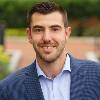 Dr. Lopez received his BS in Chemistry from New York University and his Ph.D. in Computational
Organic Chemistry from UCLA . He completed a postdoc at Harvard in Computational Chemistry
and then started at Northeastern University in 2017. Dr. Lopez's group focuses on
using computational chemistry and machine learning to understand light-driven processes
in molecules and materials towards sustainable chemistry and energy. They’ve published
15 papers since he arrived at NU and raised 1.8M in external funding. Dr. Lopez is
also the Founder and Director of ADSE, a national non-profit organization focused
on increasing diversity and inclusion across Science and Engineering from community
colleges to professional research careers.
Dr. Lopez received his BS in Chemistry from New York University and his Ph.D. in Computational
Organic Chemistry from UCLA . He completed a postdoc at Harvard in Computational Chemistry
and then started at Northeastern University in 2017. Dr. Lopez's group focuses on
using computational chemistry and machine learning to understand light-driven processes
in molecules and materials towards sustainable chemistry and energy. They’ve published
15 papers since he arrived at NU and raised 1.8M in external funding. Dr. Lopez is
also the Founder and Director of ADSE, a national non-profit organization focused
on increasing diversity and inclusion across Science and Engineering from community
colleges to professional research careers.
If you have any questions or suggestions for speakers, please contact Christina Rotsides, Chemistry instructor, at rotsideschristina@fhda.edu or SLI Director Sophia Kim at kimsophia@fhda.edu.
STEM Resources & OpportunitiesSign up to receive emails about internships, scholarships, conferences, and other opportunities for students in STEM. |
