Physics
Apply For AdmissionWhy Study Physics
Physics, the fundamental science, conceptualizes the basic principles of the universe
and establishes the foundation for astronomy, chemistry and geology. The beauty of
physics lies in a small number of powerful concepts which expand our view of the world
around us and which lead to many engineering applications from which we derive many
benefits.
What you can do with a degree in Physics
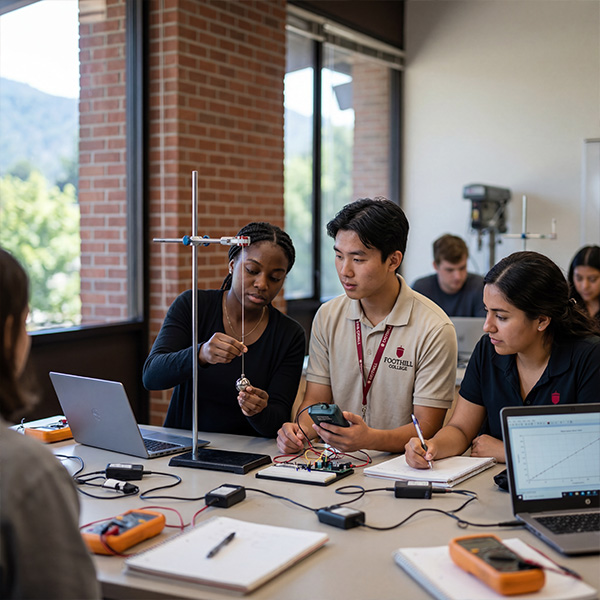
A major in Physics can prepare you for:
- Astrophysics
- Geophysics
- Engineering physics
- Nuclear physics
- Space physics
- Physics education
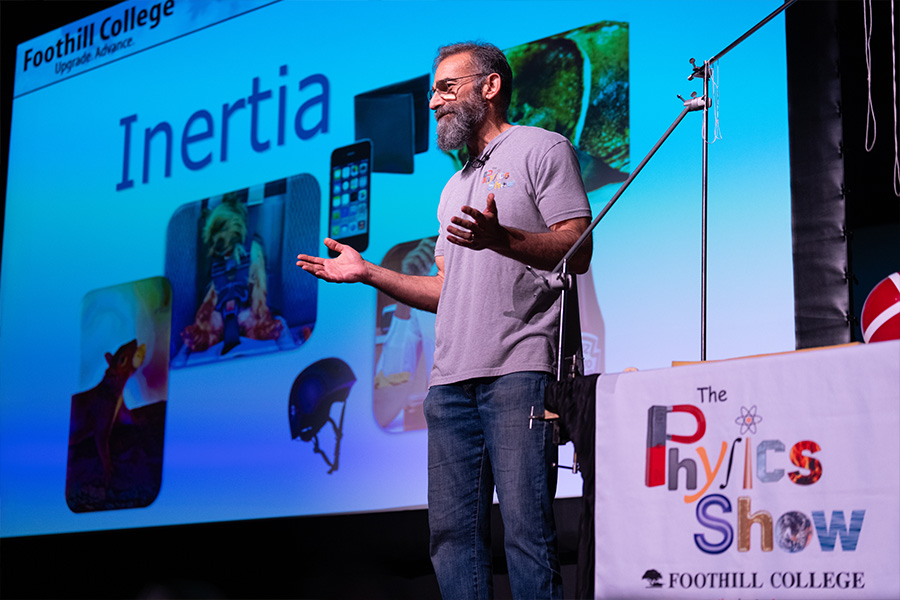
Physics Show at Foothill
Experience the wildly popular Foothill College Physics Show, where exciting demonstrations bring physics concepts to life. Performances take place during the fall and winter quarters.
See Upcoming Show DatesFrequently Asked Questions
The following chart gives you an idea of which quarters the different physics classes are offered (and if they are day or night classes). The different sequences are outlined on different lines in the table. For example, if you are taking Physics 4 and start the sequence in the fall, look at line 2 in the table. If you start in the winter, look at line 3. With the exception of Phy 4C and 4D, which may be taken in any order, the courses must be taken in order (A then B then C). This chart represents a “typical” schedule of classes. For exact time and location information, consult the current class schedule.
| Fall | Winter | Spring | Summer | |
|---|---|---|---|---|
| 1 | 2A (Day & Night) | 2B (Day & Night labs, 5:30-7:20 lecture) | 2C (Day & Night labs, 5:30-7:20 lecture) | |
| 2 | 4A (Day & Night) | 4B (Day & Night) |
4C (Day & Night) 4D following spring |
|
| 3 | 4B (Day Only) | 4C (Day & Night) | 4A, 4D (Day only) | 4A (Day only) |
| 4 | 6 (Online) | 6 (Online) | ||
| 5 | 12 (Day only) |
The biggest myth about physics is that it is too difficult for all but the next Einstein. This is simply not true. Yes, physics can be challenging, but so is anything that you study seriously. Many successful physicists can tell you that they were not the top students in their schools. What they had was interest and motivation.
As a career, physics offers challenge, excitement, an attractive salary, and a chance to make important contributions to society.
Degrees & Certificates
View list below for programs offered at Foothill. Then select program map for a possible schedule that fulfills program and college requirements.
For program requirements and full course listings, view degrees and certificates information.
Ways to Experience More!
At Foothill, we offer many opportunities to get involved outside the classroom.
Science Learning Institute

Discover internships, events, and learning opportunities through the Science Learning Institute, which supports students pursuing STEM careers and promotes diversity and equity in science fields.
Emerging Technologies Institute

Explore the future of technology through Foothill’s Emerging Technologies Institute, where students experiment with tools like AI, virtual reality, quantum computing, and renewable energy.
Research & Service Leadership Symposium

Showcase your ideas and creativity at Foothill’s annual symposium, where students present research, service projects, and creative work through talks, posters, performances, and art exhibitions.
Global Experiential Learning

Travel, study, and gain real-world experience through Foothill’s faculty-led global programs. Explore new cultures, earn academic credit, and participate in service learning, research, and study abroad around the world.
Related Programs and Degrees